When Competitiveness Became the Main Signal
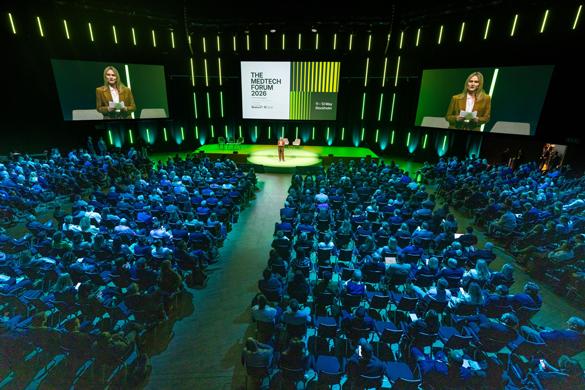
The MedTech Forum 2026 produced an unusually clear signal. Across three days of sessions and professional exchanges in Stockholm, discussions repeatedly returned to a concern extending beyond regulation alone: whether Europe can maintain the industrial conditions required to convert medical innovation into sustainable scale.
MDR and IVDR remained important, but they increasingly appeared as components of a broader question involving investment, evidence generation, reimbursement, procurement, manufacturing capacity, supply-chain resilience, cybersecurity, and strategic autonomy. Competitiveness emerged not merely as an economic objective, but as a healthcare-resilience objective.
Publication date: 31 May 2026
Event: The MedTech Forum 2026
Location: Stockholm, Sweden
Event date: 11–13 May 2026
Why This Event Mattered
The formal agenda was broad. The MedTech Forum addressed regulatory evolution, reimbursement, health data, artificial intelligence, manufacturing resilience, sustainability, cybersecurity, geopolitics, and industrial policy. Yet the discussions converged with notable consistency.
The central concern was no longer simply whether individual regulations could be improved. The deeper issue was whether Europe remains an attractive and effective environment in which to move innovation from concept to routine clinical adoption, and from early adoption to durable industrial position.
Industry participants have discussed aspects of this privately for years. What was notable in Stockholm was the degree to which the diagnosis appeared to be increasingly shared across sessions, speakers, companies, and stakeholder groups, even if the solutions remain less clear.
Field Observations
Competitiveness became the organising signal
MDR and IVDR remained prominent topics in Stockholm. Concerns regarding implementation, predictability, and execution have not disappeared, but regulation no longer appeared to be the ultimate concern. It was increasingly discussed as one component of a wider competitiveness challenge.
Across multiple sessions, the path from innovation to sustainable commercial scale was described as lengthy, fragmented, and expensive. Regulatory approval is only one step in a longer sequence involving evidence generation, health-technology assessment, reimbursement, procurement, and clinical adoption.
The issue is therefore broader than market access. It is whether Europe can remain an attractive environment in which innovation becomes clinical capability and durable industrial position. Competitiveness emerged not as a standalone policy topic, but as the frame through which regulation, investment, adoption, and industrial sustainability were increasingly discussed.
Resilience moved beyond healthcare economics
Several discussions moved into areas more commonly associated with industrial strategy: supply-chain resilience, manufacturing geography, trade policy, cybersecurity, technological sovereignty, and strategic autonomy.
The underlying point was direct. Healthcare systems depend on physical industrial capacity. Diagnostic reagents, instruments, medical devices, and digital infrastructure cannot be improvised during a crisis; they must exist beforehand.
If Europe wishes to preserve meaningful strategic autonomy in healthcare, it must maintain the industrial foundations capable of supporting that autonomy. Competitiveness is therefore not only an economic objective. It is also a resilience objective.
The exhibition floor showed the weight of institutional navigation
The formal programme communicated one set of signals, while the exhibition floor communicated another. A notable proportion of exhibitors focused not on individual medical technologies but on the enabling functions surrounding innovation: regulatory services, clinical-evidence generation, market-access support, reimbursement expertise, health economics, data platforms, quality systems, digital integration, contract manufacturing, and industrial-support services.
Complex industries naturally generate specialised ecosystems. However, the density of these services reinforced a broader impression: the route from idea to sustainable adoption now requires an extensive supporting architecture. Innovation remains visible, but institutional navigation has become increasingly consequential.
Human Atmosphere and Professional Exchange
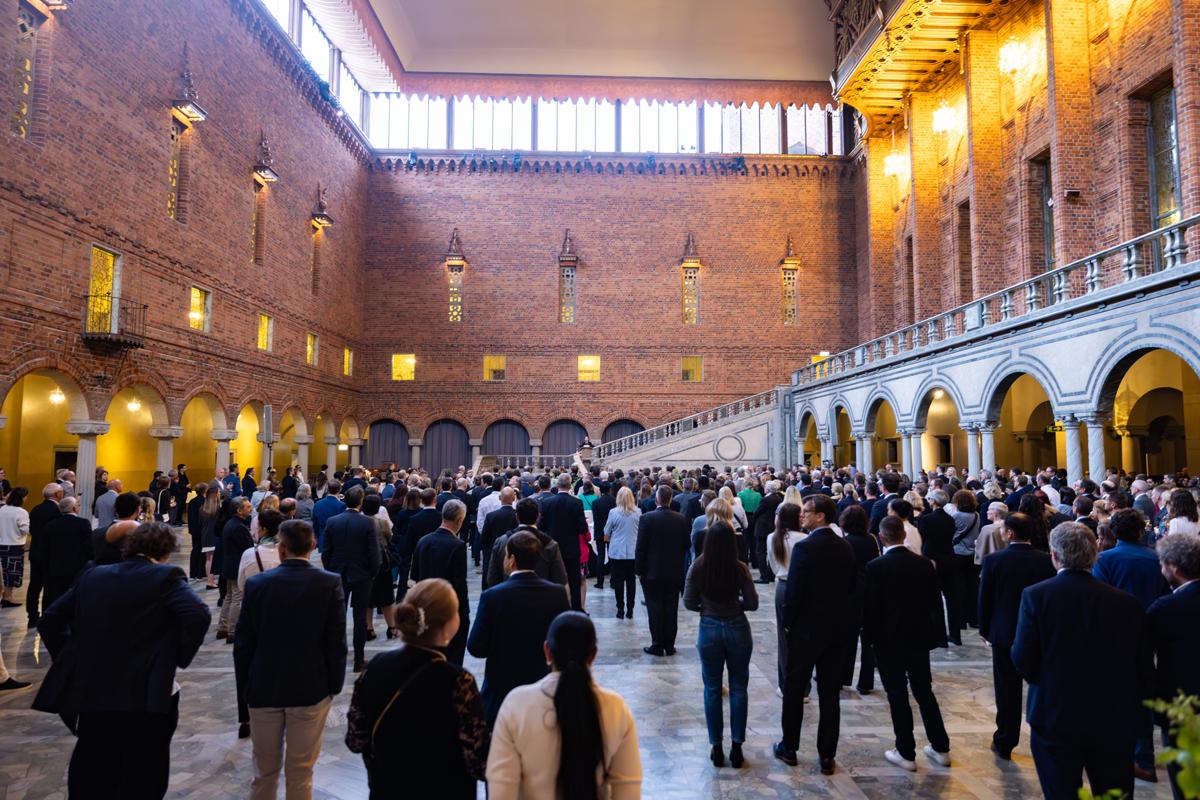
The opening reception at Stockholm City Hall provided a memorable setting. The venue, internationally associated with scientific recognition and the Nobel Prize banquet, offered an appropriate reminder of Europe’s scientific heritage. It also created a useful contrast with the more difficult question examined throughout the event: how that heritage can continue to translate into industrial leadership.
The atmosphere across the forum was serious but constructive. The most useful exchanges did not occur only during the formal sessions. Executives, consultants, investors, manufacturers, service providers, and policymakers often examined the same questions more directly and candidly in smaller conversations.
A personal perspective as a delegate
My own experience as a delegate reinforced that impression. The value of the forum was not limited to the formal programme; it also came from the opportunity to listen, compare perspectives, test assumptions, and discuss the implications of the broader medtech debate with participants working from different positions across the ecosystem.
These conversations helped clarify the distinction between a regulatory problem and a wider competitiveness problem. MDR and IVDR remain important, but the exchanges in Stockholm repeatedly pointed towards a more extensive question: whether Europe is building the conditions required for innovation to progress from scientific promise to routine adoption, sustainable scale, and durable industrial capability.
![Miguel Oliveira taking part in a professional discussion as a delegate at The MedTech Forum 2026 in Stockholm.
Image credit: [Confirm official archive attribution and any required credit line before publication.]](https://persodia.org/wp-content/uploads/2026/05/008A2847-1024x683.jpg)
Persodia presence
Persodia Research maintained a modest presence within the event area: a simple meeting point for discussions with industry participants and an opportunity to make its freely available publications accessible to interested visitors.
The objective was straightforward: to create a space for useful conversations while observing how broader medtech concerns translated into more specific IVD questions. These exchanges helped shape the observations and analysis that contributed to the drafting of Persodia Research Monograph No. 3.
They also helped translate the broader medtech signal into a more focused diagnostics question: are Europe’s fragmented institutional processes evolving quickly enough to sustain a competitive diagnostics industry, or are slow implementation dynamics becoming a constraint in their own right as expectations placed on the sector continue to expand?
That question became central to the subsequent Persodia Research analysis.
Strategic Implications
The principal outcome of Stockholm was not a solution, but a diagnosis. That distinction matters.
The challenge facing European medtech extends beyond individual regulations, technologies, or reimbursement systems. It concerns the overall environment through which innovation becomes clinical capability and durable industrial position.
Regulatory reform remains necessary, but it is unlikely to be sufficient on its own. The broader discussion must include investment attractiveness, procurement structures, reimbursement, evidence expectations, manufacturing capability, workforce development, and industrial resilience.
Shared diagnosis is not the same as action, but it is often the condition that makes constructive improvement possible. The discussions in Stockholm were notably pragmatic: less focused on prescribing a single solution than on identifying where conditions could be improved so that innovation reaches patients more effectively.
The objective was clear: a dynamic and resilient medical-technology industry capable of delivering greater benefits to healthcare systems and the patients they serve.
Closing Note
Credit is due to the organisers, speakers, and participants for a thoughtful and well-executed forum. The reception at Stockholm City Hall offered an appropriate reminder of Europe’s scientific heritage. The more difficult question was how that heritage can continue to translate into future industrial leadership.
That conversation is far from finished.