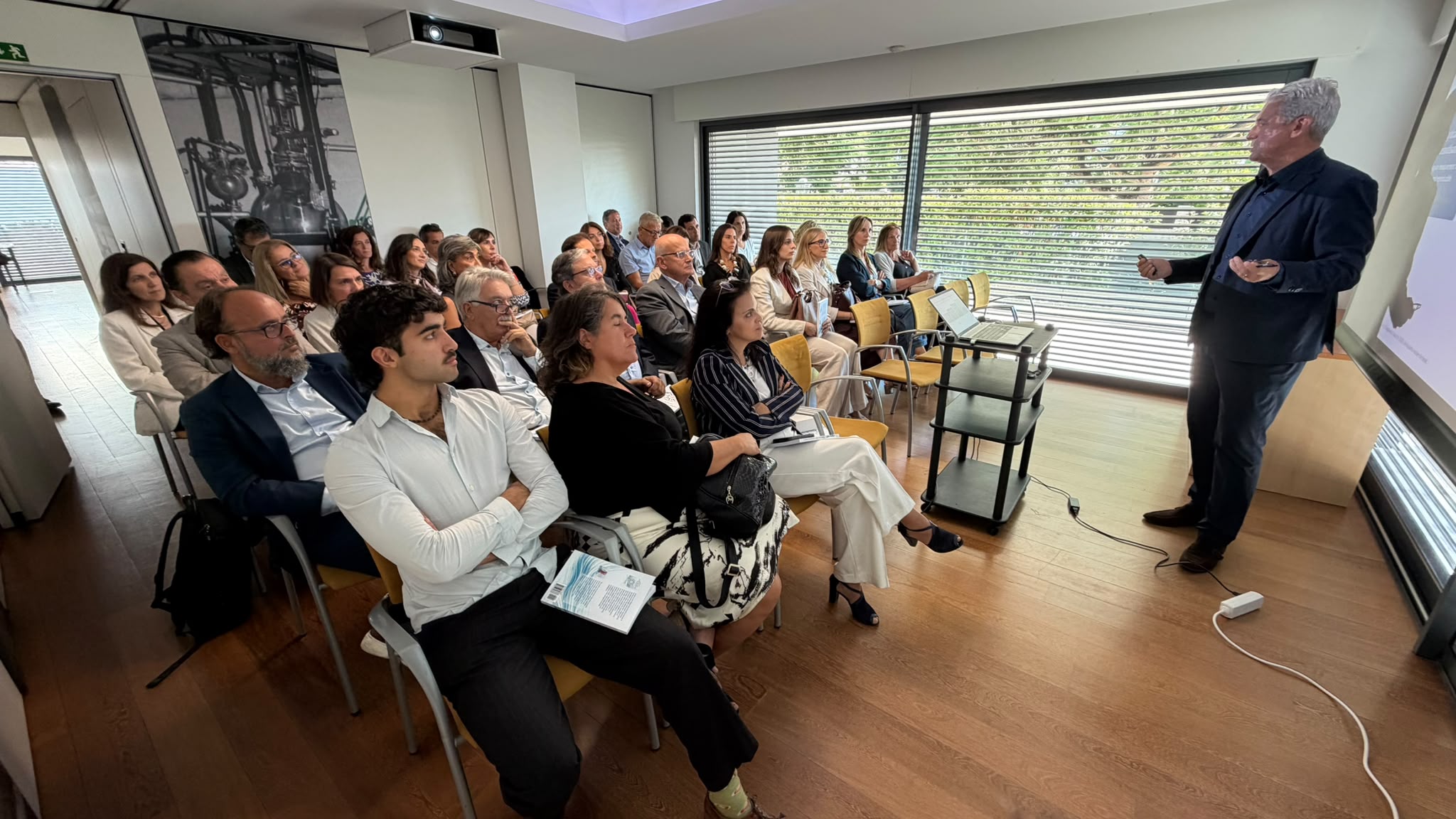
Reflections from APIFARMA on the next directions of diagnostics, the work required to deliver innovation, and the industry’s opportunity to make its value better understood.
Miguel Oliveira · Event Note
APIFARMA, Lisbon · 8 October 2026
Summary
Diagnostics has built the capacity to deliver reliable biological information at scale and at an accessible cost.
New demands are taking it deeper into biology, closer to people, and towards more intelligent and connected applications.
Delivering these innovations requires early and competent market development alongside product development.
Commercial teams need a broader skill set to demonstrate value, support adoption and work through partnerships.
The discussion at APIFARMA highlighted two shared opportunities: making laboratory data reusable and making the value of diagnostics more widely understood.
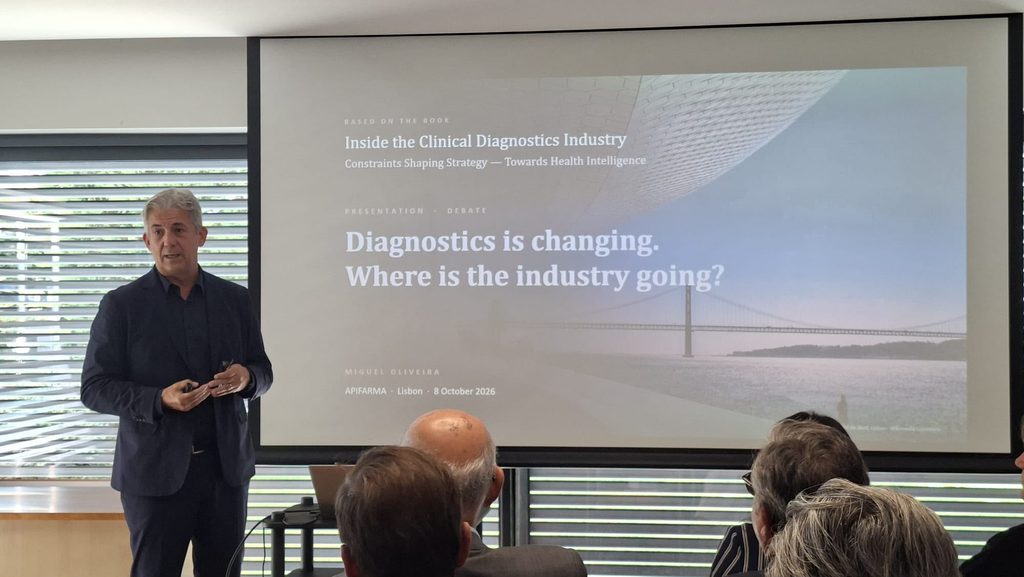
The industry’s next stage
On 8 October, I joined APIFARMA’s In Vitro Diagnostics Working Group in Lisbon to discuss where the diagnostics industry is going. Drawing on my book, Inside the Clinical Diagnostics Industry: Constraints Shaping Strategy — Towards Health Intelligence, the presentation addressed two connected questions: what new capabilities is diagnostics developing, and what will it take to turn them into sustained use?
The industry has accumulated considerable capability. Biological measurement became reliable and reproducible. Automation, informatics and service made that capability scalable. Specialisation brought deeper answers to biological and clinical questions. Increasingly, the value of those answers depends on coordination among laboratories, clinicians, industry, payers and other institutions.
Each stage adds to what came before. The next developments will continue to depend on this accumulated experience.
An achievement whose value remains difficult to see
The value of diagnostics extends well beyond the cost of the test. Two APIFARMA studies, covering eight Portuguese cases, make that contribution visible through estimates of social return on investment. Across the applications presented, estimated returns ranged from approximately five to fifteen euros for each euro invested in testing.
These are estimates for specific applications and study assumptions. They illustrate how benefits extend across patients, healthcare services and the wider economy, with a different distribution in each case.
Yet success has brought a paradox. Diagnostic testing has become so dependable that its reliability is often taken for granted. Its affordability encourages management as a cost line. Its specialisation keeps much of the work outside public view.
The industry has good reasons to be proud of what it has built. It also has continuing work to do in explaining its contribution in terms that matter to those making healthcare decisions.
Five pressures, four directions
Demand for diagnostic information is broadening. Ageing and chronic disease require repeated assessment and monitoring. New treatments depend on biomarkers. Prevention creates demand for earlier identification of risk. People want a more active role in managing their health. Healthcare systems need to achieve more with constrained resources.
In the presentation, I used a compass to organise the industry’s responses into four directions.
Deeper. Diagnostics addresses more specific biological questions. Some developments emerge alongside pharmaceutical research; others come from analytical technologies that progress through research and specialised laboratories. Depending on complexity, scale and economics, they may reach users as industrialised IVD products or as services delivered by specialised laboratories.
Closer. Measurement moves towards the person. Professional point-of-care testing brings information closer to a clinical decision. Self-testing, home sampling, continuous monitoring and wearable sensors create additional models. These activities span IVD, other medical devices and consumer health, with different requirements and routes to adoption.
Smarter. Computation strengthens test selection, signal processing, combinations of measurements and interpretation. Its usefulness depends on the clinical purpose, the quality and context of the information, and appropriate validation.
Connected. Diagnostic information becomes reusable across institutions and over time. That requires curation: preserving the method, units, timing and other context needed to interpret a measurement. Sharing information and applying computation then become more useful because the meaning of the original measurement remains available.
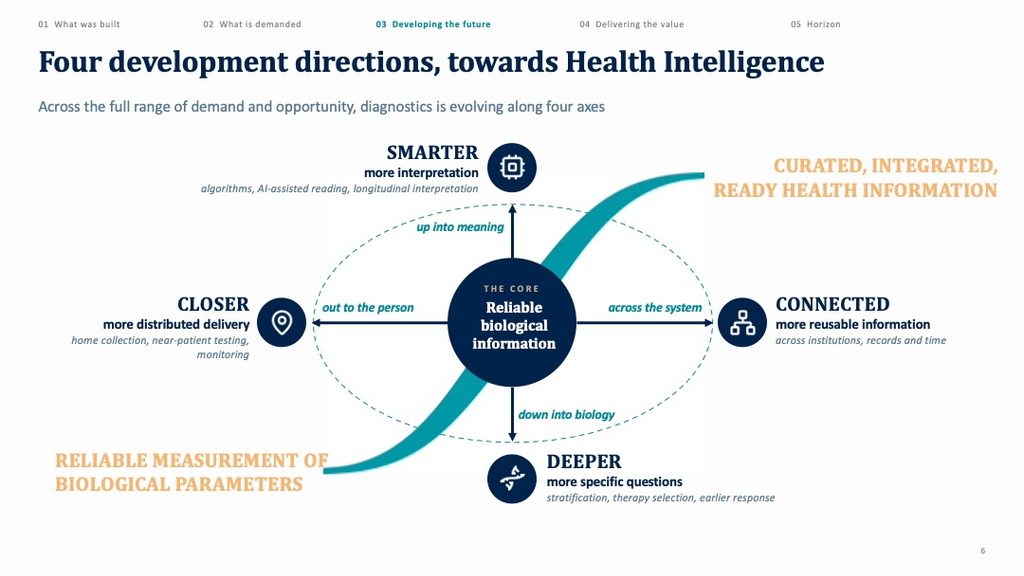
Four directions of diagnostic development: deeper, closer, smarter and connected. Reliable biological measurement remains the foundation.
Innovation must cross the valley
These developments create opportunities to expand the value of diagnostics. Delivering them is demanding for large companies and startups alike.
Large companies have resources, but many projects compete for them. Strategic fit, portfolio priorities and execution capacity limit what can proceed. Startups may demonstrate strong science and convincing technology while still lacking the capabilities needed to reach sustained adoption.
In conversations with smaller companies, I have frequently encountered an underestimation of the work involved in delivering value. Registration is an important milestone. A viable business also requires evidence, customers able to adopt the solution, workable funding arrangements and a repeatable way to serve the market.
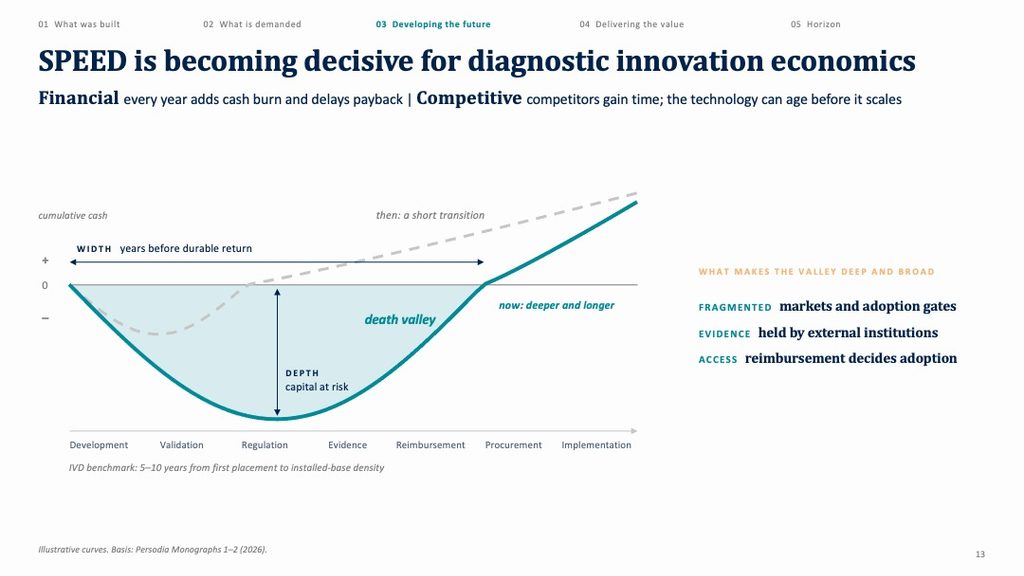
The valley of death helps describe this challenge. Its depth represents capital at risk; its width represents time until sustained returns. Fragmented adoption decisions, dependence on external evidence generation and uncertain funding can extend that time. Each additional year consumes resources and gives competitors more time.
Some of these conditions are difficult for an individual company to change. Others can be addressed through preparation.
Develop the market alongside the product
Early and competent market development is critical both to crossing the valley and to reducing its width. It starts before launch, alongside product development.
While technical teams advance science, validation and conformity, market development establishes reference relationships, identifies evidence needs, investigates funding routes and prepares the institutions where adoption can begin.
Country teams have a central role because many of these conditions are local. They understand which centres can establish credibility, what evidence decision-makers need, how budgets work and which changes in clinical practice or laboratory workflow are feasible.
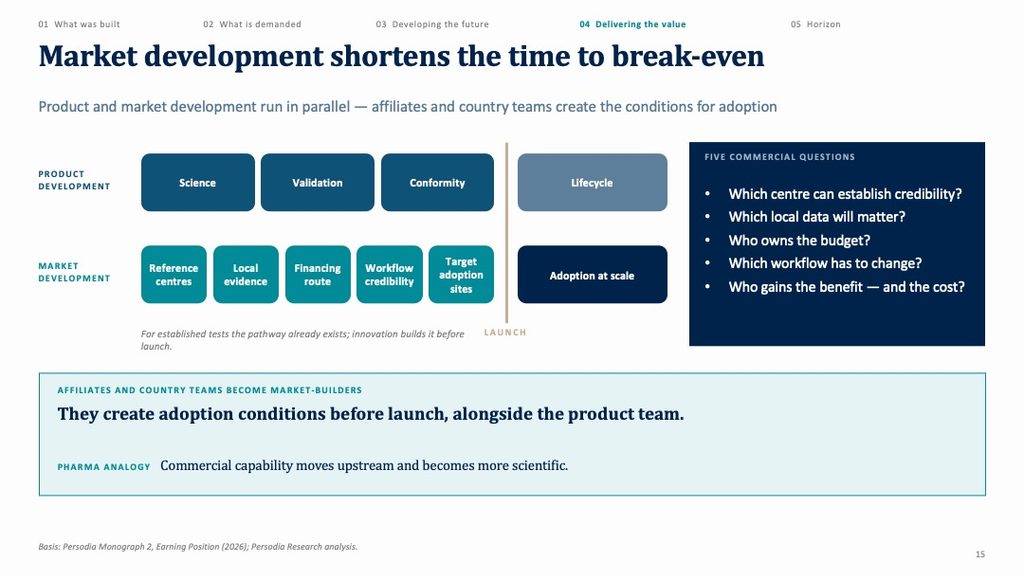
One question repeatedly exposes the difficulty: who receives the benefit, and who bears the cost? A valuable innovation can struggle when those parties are different and no arrangement connects their interests.
Early market development makes dependencies visible while there is still time to influence product design, evidence plans, partnerships and the sequence of market entry.
A new skill set for commercial teams
This work asks more of commercial organisations. Evidence generation, engagement with scientific societies, health economics, market access, procurement, data and partnerships each require specific capabilities.
I experienced an earlier version of this change at Roche in Portugal between 2000 and 2003. Customer value was expanding from the analyser towards the laboratory system: middleware, information management and the organisation of work. I established and led a five-person laboratory-consulting team working inside customers’ laboratories. Building that capability was a substantial organisational change.
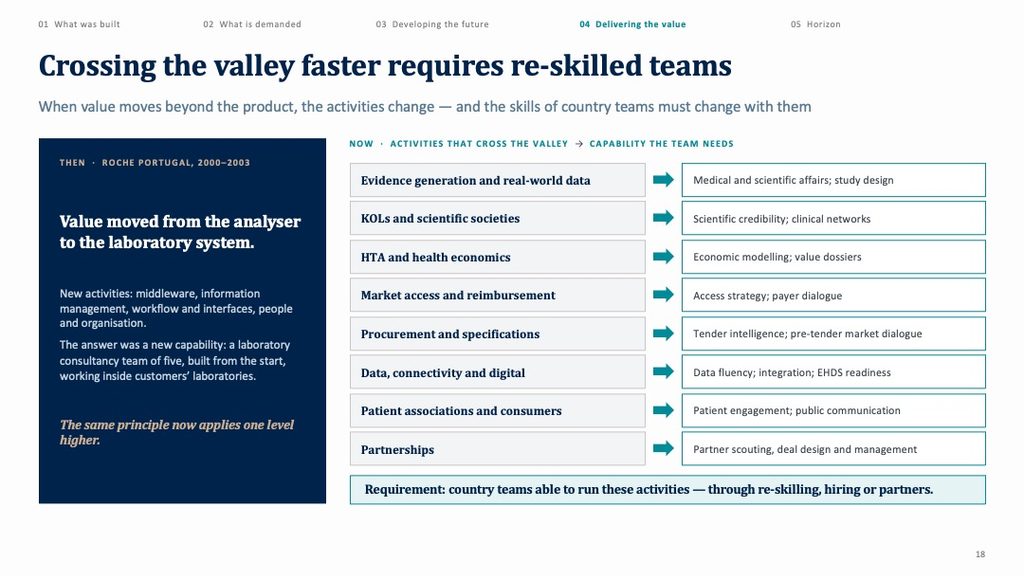
Today, the scope is wider. Commercial teams need to perform or coordinate work that extends across clinical, economic and institutional decisions. Innovation-based ventures need this broader skill set to turn technical capability into a sustainable business.
Partnerships are also becoming a way of operating. Customer needs often require capabilities that one company cannot assemble economically or quickly enough on its own. Effective collaboration requires shared objectives, clear responsibilities, trust and the ability to work across organisational boundaries.
Towards Health Intelligence
The horizon I describe as Health Intelligence brings these developments together: an organised body of information and knowledge, accumulated over time and available to support decisions.
Laboratory medicine, pathology, genomics, imaging, physiology and clinical history each contribute. The value of the combined information depends on knowing where it came from, what it means, how it relates to other information and when it is suitable for use.
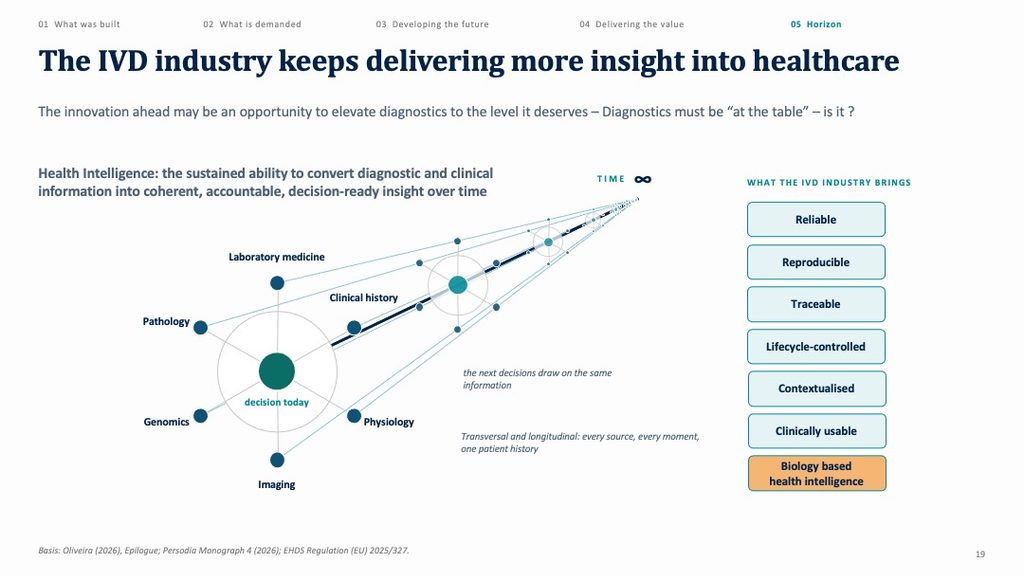
The diagnostics industry contributes its experience in producing dependable biological information. Its future role will also depend on how effectively it helps that information become useful in broader clinical and healthcare decisions.
The discussion: reusable data and visible value
The discussion, moderated by Paulo Sequeira Dias, explored laboratory data within the European Health Data Space and the strategic opportunity for clinical laboratories and the IVD industry.
Particular attention went to curation. Preparing diagnostic information for reuse across institutions and over time is an additional laboratory service, with service and infrastructure costs. There was broad agreement that laboratories and industry should work together to realise the opportunity, and that the industry should take initiative in that collaboration.
A second topic was how to make the value of diagnostics better understood by the public, policymakers and healthcare institutions. Participants connected limited recognition with reimbursement and investment pressures that constrain the sector’s ability to develop and deliver innovation.
The discussion considered two levels of action. Collective promotion through MedTech Europe and national industry associations gives diagnostics a shared voice. Participants questioned whether the resources devoted to this work provide sufficient visibility amid competing healthcare priorities.
Individual companies can make more specific value arguments for their products, systems and platforms. Such efforts were expected to have greater impact on concrete decisions, while still facing strong competition for attention and budgets.
No settled answer emerged. A central concern remained how diagnostics can move out of the background and become better understood and valued by patients, healthy people, physicians and those making healthcare decisions.
Presentation and sources
Download the presentation: Diagnostics is changing. Where is the industry going?
The public presentation includes the full reference list. This Event Note draws on the presentation, my professional experience and my account of the discussion. Selected supporting material includes:
- Oliveira M. (2026). Inside the Clinical Diagnostics Industry: Constraints Shaping Strategy — Towards Health Intelligence.
- Rodrigues et al. (2026). Impact of in vitro diagnostic tests in health, society and economy in Portugal. Frontiers in Public Health, 14:1715491.
- APIFARMA (2025). Quando o tempo é essencial: Valor dos Testes de Diagnóstico in Vitro (DIV) nas Doenças Oncológicas.
- Gruson et al. (2026). Laboratory medicine 2050: from testing to health intelligence network, a vision from the IFCC Emerging Technologies Division. Clinical Chemistry and Laboratory Medicine.
- Plebani M et al. (2024). A vision to the future: value-based laboratory medicine. Clinical Chemistry and Laboratory Medicine, 62(12), 2373–2387. DOI: 10.1515/cclm-2024-1022.
- Lennerz JK et al. (2026). Unified definition of integrated diagnostics: a position statement of the EFLM. Clinical Chemistry and Laboratory Medicine. DOI: 10.1515/cclm-2026-0949.
My thanks to APIFARMA and its In Vitro Diagnostics Working Group, Pedro Pereira, Pedro Branco and Paulo Sequeira Dias, and to everyone who contributed to the discussion.