Where Analytical Power Meets the Diagnostics Moat
analytica 2026 offered a useful vantage point from which to observe technologies before they become diagnostics. Across the exhibition halls in Munich, analytical capability was visible in many forms: proteomics platforms, mass spectrometry in multiple configurations, sequencing automation, flexible pre-analytical robotics, increasingly sophisticated assay workflows, and a broad range of laboratory systems designed to improve reliability and operational efficiency.
The scale of technological progress was impressive, but the most relevant observation for diagnostics lay elsewhere. The real challenge is not simply achieving analytical performance. It is building the conversion layer required to translate scientific capability into routine clinical use.
Publication date: 6-4-2026
Event: analytica 2026
Location: Munich, Germany
Event date: 24–27 March 2026
Why This Event Mattered
analytica is one of the clearest places to observe the boundary between laboratory technology and clinical diagnostics.
Advanced analytical systems often reach impressive levels of sensitivity, precision, throughput, and automation before they become clinically deployable. A technology may perform strongly in a research environment and still remain far from widespread diagnostic adoption.
The barriers are frequently not located in the underlying analytical principle. They arise in the surrounding architecture required for routine use: clinical evidence, regulatory classification, reference intervals, workflow integration, reimbursement logic, service models, operational reliability, and economic justification.
This is why analytica matters from an IVD perspective. It shows where analytical power is expanding, where operational barriers are being reduced, and where technologies may begin to cross from laboratory capability into regulated diagnostic infrastructure.
Questions I Was Watching
- Which analytical technologies can move beyond research performance into approved IVD applications?
- Which workflows are becoming operationally compatible with routine clinical laboratories?
- Where will evidence, reimbursement, and reference-range infrastructure become the real barriers?
- Which automation layers can reduce operational friction quickly enough to accelerate adoption?
- Where does technological differentiation end and the diagnostics conversion problem begin?
Field Observations
Analytical performance is often no longer the limiting factor
Three days of exhibition-floor observations and professional conversations reinforced a central point: the gap between analytical technologies and clinical diagnostics is not primarily technological.
The analytical performance is frequently already strong enough. The harder barriers lie in the disciplines required to convert that performance into reliable clinical use.
Evidence must demonstrate meaningful value. Regulatory classification must be defined. Reference intervals must be established. Workflows must fit routine laboratory practice. Service models must support reliable operation. Reimbursement and economic logic must be sufficiently credible to justify adoption.
This conversion layer is where many apparently powerful technologies slow down.
Clinical mass spectrometry illustrates the conversion challenge
The pattern was particularly visible in clinical mass spectrometry. LC-MS has already entered specialised and reference laboratories, but broader adoption requires more than continued advances in instrument performance. Operational burden remains a decisive constraint.
The strategically relevant signals therefore came not only from instruments, but also from assay kits, sample-preparation systems, automation layers, software interfaces, and workflow simplification.
Companies such as Chromsystems, Recipe, and Sentinel illustrate the direction of travel. Analytical methods become more relevant to IVD when they are translated into reproducible assay formats with clear clinical value and sufficient operational discipline.
The opportunity is not simply to increase analytical power. It is to make that power usable.
Automation may cross faster than some analytical platforms
The same pattern appeared in laboratory automation.
Robotics, sample-preparation systems, flexible pre-analytical platforms, and workflow-integration technologies may cross into routine clinical use more quickly than some analytical platforms because they address an immediate operational problem: workforce scarcity and the need for reliable laboratory execution.
Clinical laboratories do not adopt technology in the abstract. They adopt solutions that improve quality, reduce manual burden, stabilise workflows, support traceability, and fit within existing operational constraints.
Automation therefore occupies an important position within the conversion layer. It may not always appear as the most scientifically novel part of the system, but it can determine whether a more advanced analytical method becomes practically deployable.
The diagnostics moat lies in the conversion layer
The most important implication is that the defensible advantage in diagnostics is often misunderstood.
The moat is not analytical superiority alone. It is the complete conversion layer that translates analytical capability into a clinically usable, economically justified, and operationally disciplined diagnostic system.
That layer includes evidence, workflow design, regulatory pathway, reference ranges, implementation expertise, service capability, reimbursement logic, and trust within the clinical environment.
Technology remains essential, but technology alone is insufficient.
Human Atmosphere and Professional Exchange
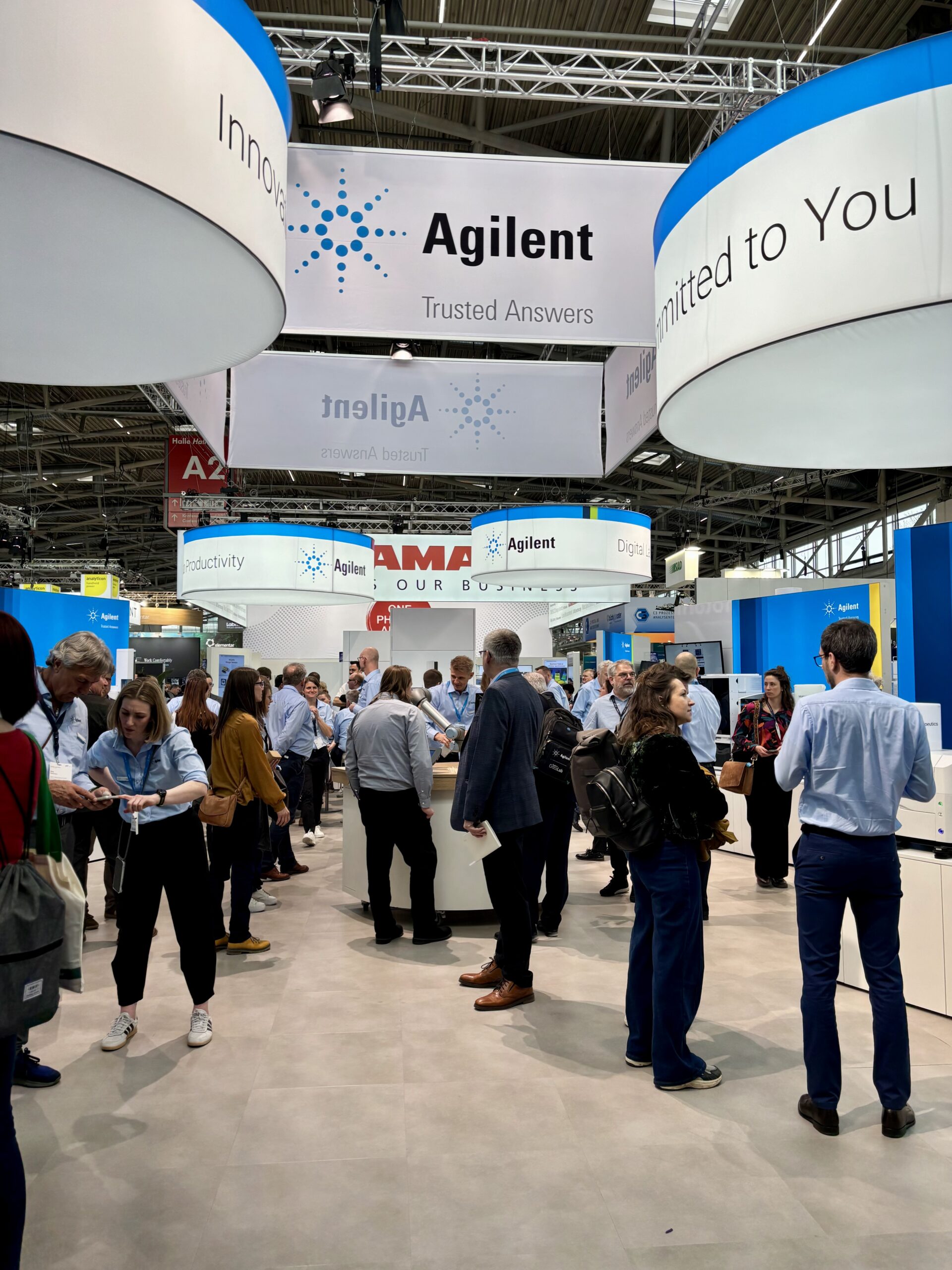
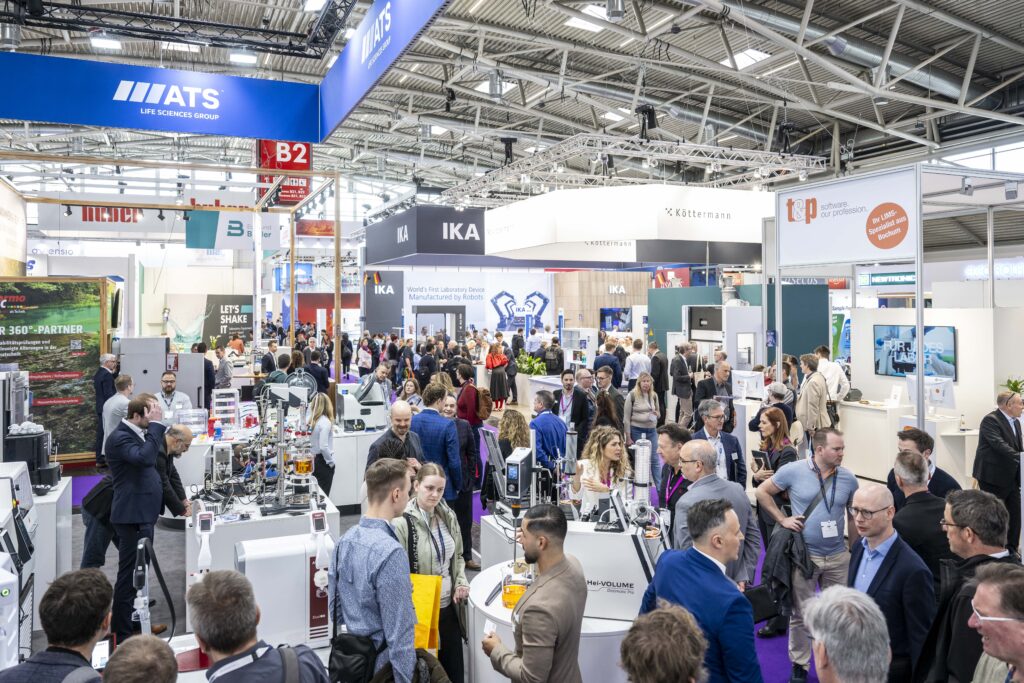
The exhibition itself was dense, active, and technically serious. The scale of the halls and the variety of platforms created a useful contrast with the narrower requirements of clinical diagnostics.
The event was not only an opportunity to observe technology. It also created space for focused conversations with people working at different points along the path from analytical capability to clinical use.
I had the opportunity to exchange perspectives with Prof. John Yates, Prof. Pieter Vermeersch, Dr. Jörg Döllinger, Gernot from Recipe Chemicals, and Yolanda Casas from ABB. These discussions sharpened the central conclusion: the principal difficulty is not reaching analytical performance. It is crossing into clinical infrastructure.
That distinction changes where value must be created. A company with access to an advanced analytical method still needs to build the surrounding architecture required for adoption.
A personal field observation
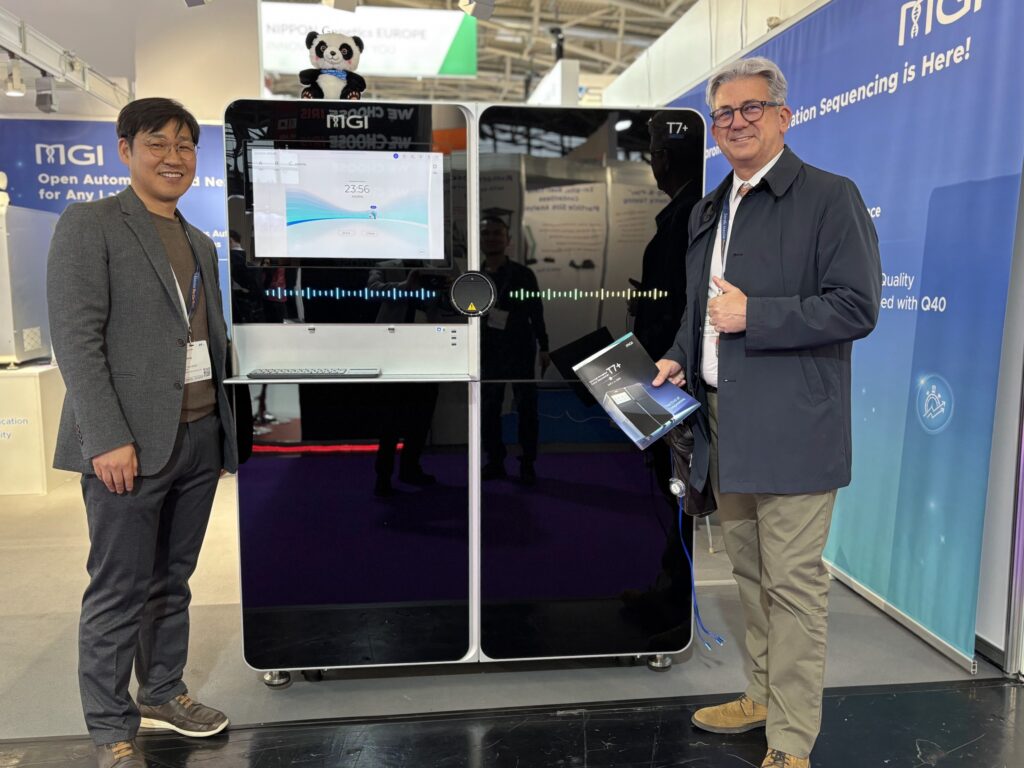
One of the clearest examples was MGI’s T7+ sequencing platform. The instrument illustrates how advanced analytical capability is increasingly being paired with automation and workflow simplification to reduce operational barriers. The strategic question is not whether sequencing performance can continue to improve, but how far these platforms can progress towards clinically usable systems with the evidence, regulatory pathway, workflow discipline, and service infrastructure required for routine diagnostic deployment.
Strategic Implications
For IVD companies, the opportunity is not simply to adopt better analytical technologies. It is to build the conversion layer that makes those technologies clinically credible and operationally usable.
This requires a broader view of competitive advantage.
Evidence must show more than analytical performance. Workflows must fit real laboratory conditions. Regulatory pathways must be sufficiently clear. Reference ranges and clinical interpretation must support routine use. Reimbursement logic must be credible. Service models must reduce adoption risk. Economic justification must be visible to laboratories and healthcare systems.
The organisations that build this layer effectively can create defensible value even when the underlying analytical technologies remain accessible to multiple competitors.
That is the diagnostics moat.
These field observations provide part of the evidence behind the new Persodia Research monograph:
Crossing from Analytical to Diagnostics: The Difficulty Is the Moat
Closing Note
analytica 2026 provided a clear reminder that scientific progress and clinical deployment are not the same thing.
The exhibition showed substantial analytical power across platforms, workflows, and automation systems. The more difficult question is how that capability becomes a clinically usable, economically justified, and operationally disciplined diagnostic system.
That is where the real strategic work begins.