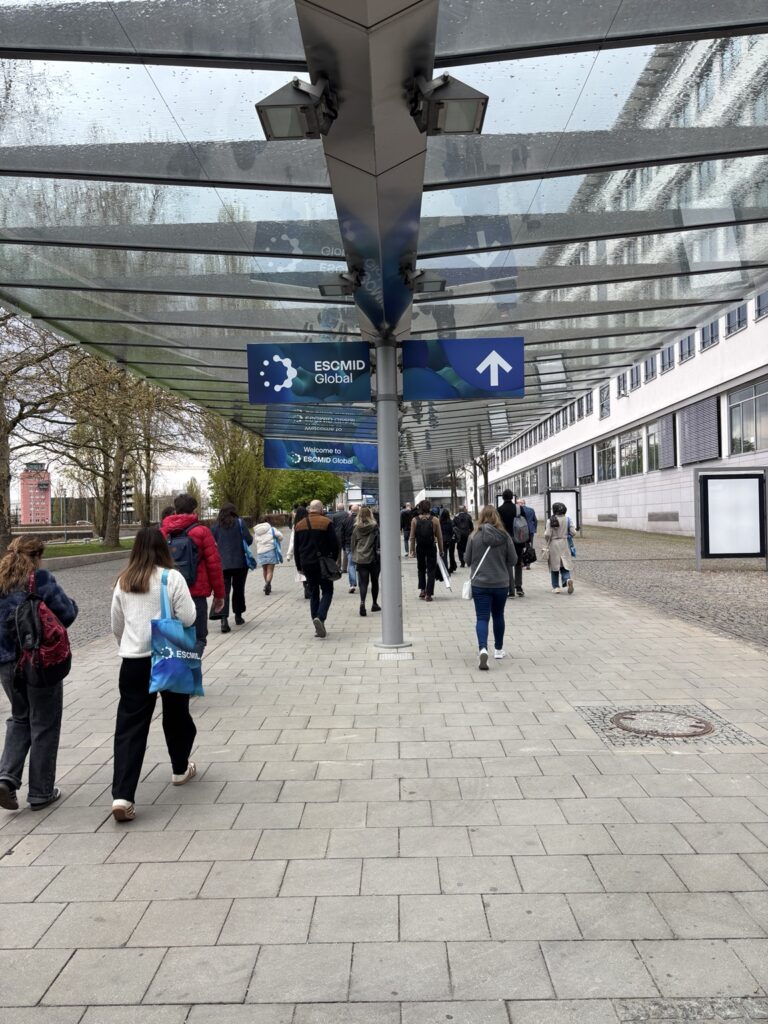
ESCMID Global 2026 offered a clear view of how diagnostics is changing within infectious-disease management. Across five days in Munich, clinicians, microbiologists, researchers, public-health specialists, and industry participants gathered around an extensive scientific programme covering antimicrobial resistance, antibiotics, vaccines, surveillance, emerging pathogens, infection prevention, clinical microbiology, and the broader management of infectious diseases.
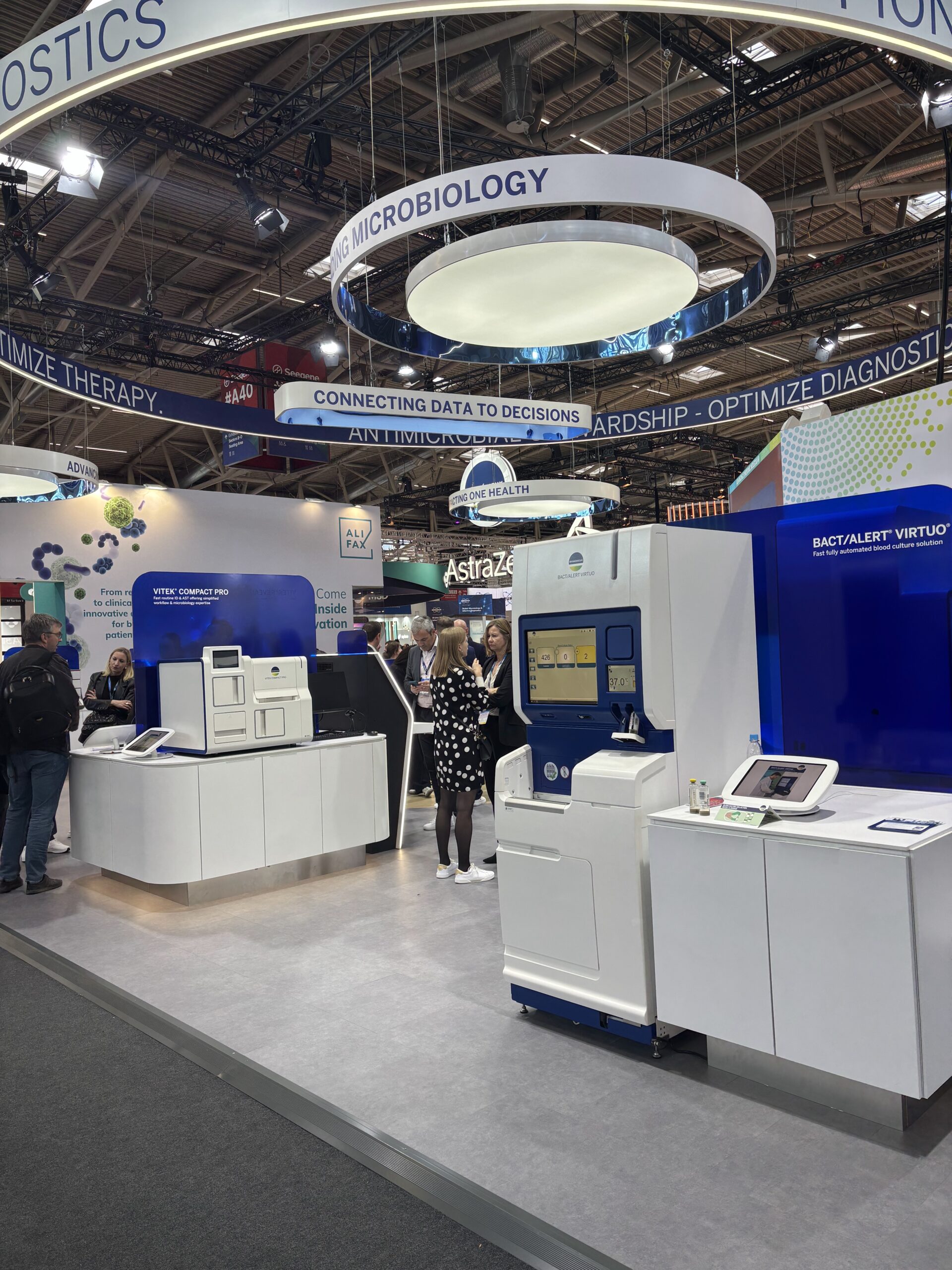
Diagnostics did not dominate the formal scientific narrative, but the exhibition floor revealed a more consequential shift. Diagnostic systems were increasingly presented not as isolated laboratory tools, but as part of the infrastructure through which infectious diseases are detected, characterised, monitored, and managed. The emphasis extended beyond assay performance towards automation, workflow integration, data connectivity, faster delivery of actionable information, and clinical decision support.
That distinction matters. A technology does not need to dominate the narrative to become essential to the system.
Publication date: 30-04-2026
Event: ESCMID Global 2026
Location: Munich, Germany
Event date: 17–21 April 2026
Why This Event Mattered
The scale of ESCMID Global makes it one of the most useful places to observe the interaction between infectious-disease science, clinical practice, public-health priorities, and industrial investment.
More than 8,500 abstracts and clinical cases were submitted for the 2026 edition. Antimicrobial resistance remained a central concern throughout the programme, alongside antibiotics, vaccines, surveillance, emerging infections, and clinical microbiology. Yet the exhibition area suggested that a significant part of the industry is already working on the next operational layer: the systems required to connect diagnostic information with clinical action.
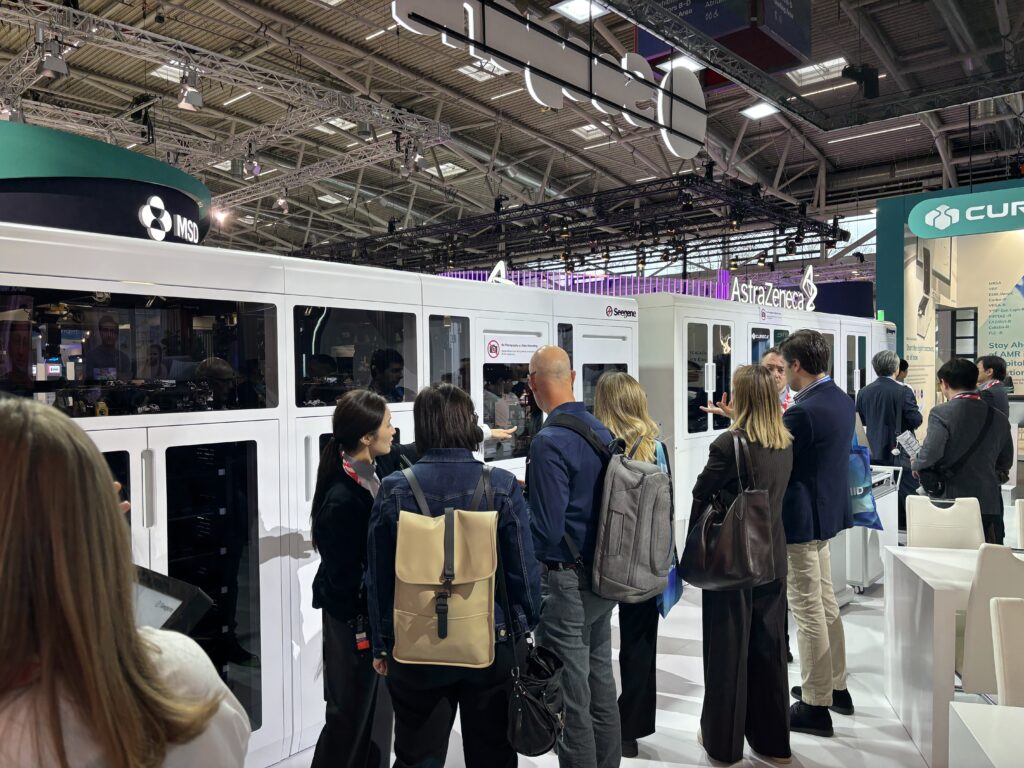
By Persodia’s estimate, diagnostics and laboratory-medicine companies occupied approximately two-thirds of the exhibition area. Large and visible industry presences included bioMérieux, Seegene, BD Diagnostics Solutions, Danaher, Roche, Copan, Bruker, and Elitech. The exhibition was not organised primarily around individual assays. It was increasingly organised around integrated diagnostic environments.
Questions I Was Watching
- How are diagnostics evolving from laboratory tools into clinical decision platforms?
- How will molecular diagnostics, sequencing, and bioinformatics reshape microbiology workflows?
- Is evidence generation keeping pace with regulatory, economic, and implementation requirements?
- What does personalised medicine look like in infectious diseases beyond oncology?
- Where is the industry building integrated infrastructure rather than individual products?
Field Observations
Diagnostics was embedded throughout the scientific programme
The dominant scientific themes remained clear. Antimicrobial resistance, antibiotics, vaccines, surveillance, and emerging pathogens occupied substantial space across the programme and industry-sponsored symposia. The urgency surrounding AMR was unmistakable.
Diagnostics appeared differently. It was rarely the principal subject of discussion, but sequencing, molecular methods, resistance profiling, bioinformatics, and surveillance tools repeatedly appeared as enabling capabilities supporting clinical research, epidemiology, antimicrobial stewardship, and treatment decisions.
This is an important transition. Diagnostics is becoming embedded within the operating logic of infectious-disease management. Its value increasingly lies not only in generating results, but in helping clinicians and public-health teams understand what those results mean and how quickly they can act on them.
Personalised medicine is moving beyond oncology
The congress also made visible a broader shift: personalised medicine is no longer confined to oncology.
In infectious diseases, more individualised approaches are emerging through rapid diagnostics, resistance characterisation, pathogen genotyping, sequencing, and increasingly sophisticated data integration. The direction is not towards one dominant technology. It is towards a spectrum of approaches ranging from simple rapid tests to complex molecular and multi-omics workflows, depending on the clinical question.
This analytical diversity has direct operational consequences. Infectious-disease diagnostics will require more differentiated workflows and closer relationships between diagnostic information, treatment decisions, infection-control measures, and public-health surveillance.
The exhibition floor presented diagnostics as infrastructure
Stepping into the exhibition area changed the emphasis. The visible themes extended beyond analytical performance towards laboratory automation, integrated platforms, molecular expansion, sequencing, bioinformatics, workflow standardisation, data connectivity, and clinical decision support.
Two examples illustrated the direction clearly. bioMérieux positioned diagnostics as a connected system linking laboratory instruments, antimicrobial stewardship, workflow integration, and clinical decisions. Seegene’s CURECA concept reflected a complementary move towards automated and standardised molecular workflows, while STAgora extended the discussion towards the aggregation and interpretation of diagnostic data.
These approaches differ in maturity and architecture, but they point towards a common direction: faster diagnostic information delivered at scale and increasingly integrated into clinical and public-health workflows.
Evidence was abundant but unevenly distributed
ESCMID Global is exceptionally rich in evidence. Analytical-performance studies, clinical-validation work, microbiology data, epidemiological surveillance, and operational experience were visible across the programme.
However, the evidence architecture appeared uneven. Health economics, health-technology assessment, reimbursement, implementation science, and adoption-at-scale evidence were less prominent than analytical and clinical validation.
That imbalance matters because the next challenge is not simply to generate more evidence. It is to ensure that evidence is sufficiently complete to support adoption. Strong analytical performance remains essential, but healthcare systems increasingly require proof that diagnostic solutions create measurable clinical, operational, and economic value under real-world conditions.
Human Atmosphere and Professional Exchange
The congress was substantial in scale but remained technically serious. The exhibition halls were active, the scientific programme was dense, and the conversations were often highly specialised. This created a useful balance between formal evidence and direct professional exchange.
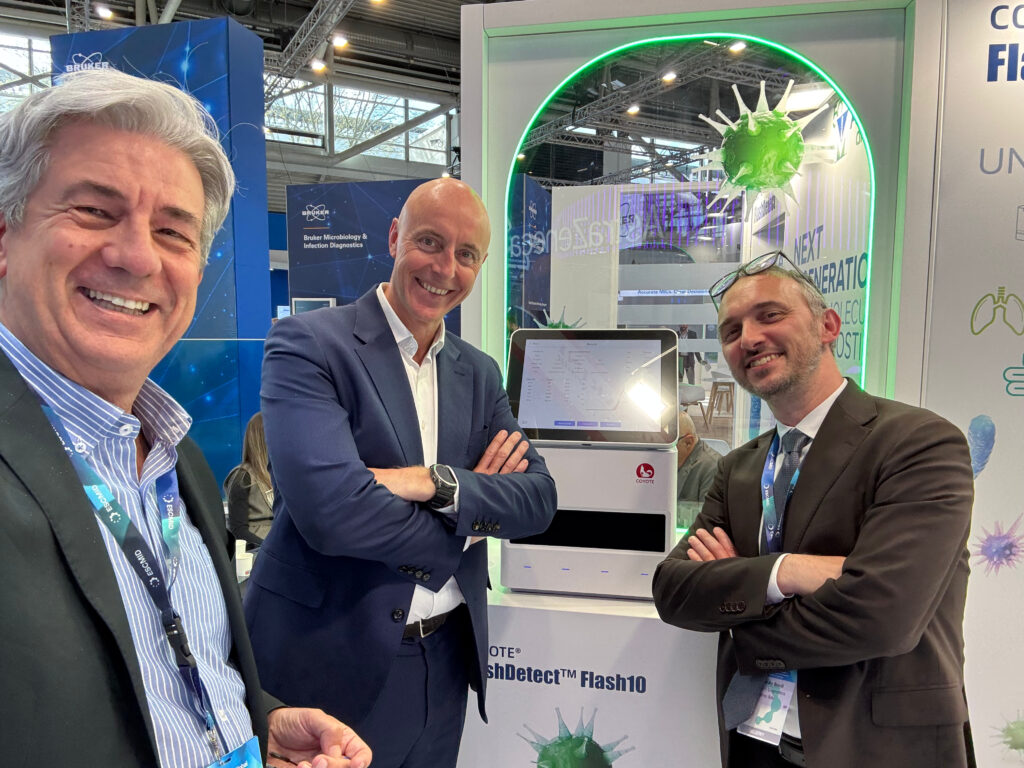
Beyond the sessions and exhibition stands, ESCMID Global provided an opportunity to discuss evidence, implementation, adoption, and the future role of diagnostics with participants working across different parts of the ecosystem. Those conversations reinforced the central observation: diagnostics is no longer present only as a collection of laboratory products. It is becoming part of the infrastructure through which infectious diseases are understood and managed.
Strategic Implications
Several conclusions emerge from ESCMID Global 2026.
First, diagnostics is increasingly embedded within infectious-disease management rather than operating as a separate discipline. Second, the industry is investing heavily in automation, molecular methods, sequencing, data integration, workflow standardisation, and decision-support capabilities. Third, personalised medicine is becoming more relevant in infectious diseases through diagnostics-enabled patient stratification, resistance characterisation, and therapy selection.
The evidence challenge is also changing. Analytical and clinical performance remain essential, but they are no longer sufficient on their own. As healthcare systems demand proof of measurable value, diagnostics companies will need to devote greater attention to health economics, implementation, HTA, reimbursement, and scaling evidence.
The exhibition floor made the industrial direction visible. The scientific programme made the evidence challenge visible. The next step is alignment.
Closing Note
Credit is due to the organisers, speakers, exhibitors, and participants for a substantial and well-executed congress.
The scale of ESCMID Global makes it difficult to reduce the event to one message, but one direction was clear: diagnostics is no longer present only as a set of laboratory products. It is increasingly becoming part of the infrastructure through which infectious diseases are detected, understood, and managed.
Related Persodia Material
- Foundation Framework
- Operations
- Commercialization
- Strategic Judgement
- Observations
- analytica 2026: Where Analytical Power Meets the Diagnostics Moat